
Ventura County Library invites our communities to take part in One Book, One Coast, a shared reading initiative connecting more than 130 library systems across California, Oregon, and Washington.
As the largest book club on the West Coast, One Book, One Coast brings readers together around one book to create opportunities for conversation, reflection, and meaningful connection across neighborhoods, cities, and state lines.
During April and May 2026, Ventura County Library and its partners will read and discuss They Called Us Enemy by George Takei, Steven Scott, and Justin Eisinger and illustrated by Harmony Becker. Physical copies of the book will be available to borrow from all Ventura County Library branches, as long as supplies last.
Through this shared reading experience, communities are encouraged to explore themes of identity, patriotism, family, loyalty, and resilience while strengthening connections through dialogue and learning.
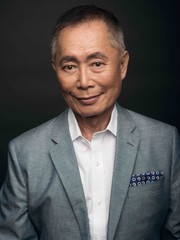
Author Talk with George Takei
George Takei will appear for a special author talk on Sunday, May 31 at 2 pm at East Los Angeles Library.
The event will be livestreamed on Zoom, allowing readers across the region to participate together.
Interested in joining the livestream? Register for the One Book One Coast Author Talk with George Takei on May 31 at 2pm.
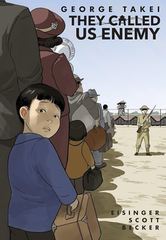
About THEY CALLED US ENEMY
In 1942, at the order of President Franklin D. Roosevelt, every person of Japanese descent on the west coast was rounded up and shipped to one of ten “relocation centers,” hundreds or thousands of miles from home, where they would be held for years under armed guard.
They Called Us Enemy is George Takei’s firsthand account of his years behind barbed wire, the terrors and small joys of childhood in the shadow of legalized racism, his family’s hard choices and tested faith in democracy, and the way those experiences planted the seeds for his astonishing future. ADAPTED FROM PENGUIN RANDOM HOUSE
About Author George Takei
George Takei is an actor, social justice activist, social media mega-power, and New York Times bestselling author, best known for his portrayal of Hikaru Sulu in the acclaimed television and film series Star Trek.
Now a community activist, Takei serves in leadership roles in various organizations dedicated to Japanese American culture and the rights of lesbian, gay, bisexual, and transgender Americans. In recognition of his contribution to the Japan-United States relationship, in 2004, Takei was conferred with the Order of the Rising Sun, Gold Rays with Rosette, by His Majesty, the Emperor of Japan. ADAPTED FROM GEORGETAKEI.COM
About the Incarceration of Japanese Americans During WW II
After Japan had bombed a navy base in Pearl Harbor, Hawaii, the U.S. entered WWII on the side of the Allies. During that time, the United States sent more than 110,000 Japanese Americans to prison camps without charges or trial. Military authorities accused Japanese Americans of aiding the enemy in the attack—and of being potential spies.
In early 1942, President Franklin Delano Roosevelt, convinced that Japanese Americans were a national security risk, signed Executive Order 9066, authorizing mass removal of people from military areas. By year’s end, every Japanese American on the west coast was behind barbed wire. Despite harsh conditions, people found ways to build community, and many resisted their imprisonment. ADAPTED FROM DENSHO.ORG
For a brief video explaining the history of the incarceration of Japanese Americans, please visit the following webpage: www.brainpop.com/topic/japanese-american-incarceration/movie.
Densho's mission is to preserve first-person testimony and historical materials to promote equity and justice, making it one of the most respected community-rooted historical projects.
- Massive digital archive with oral histories, photos, letters, and camp documents
- Peer-reviewed encyclopedia with 1,700+ articles on incarceration history
- Teaching guides, short films, timelines, and terminology resources
- Names registry of more than 120,000 incarcerated Japanese Americans
Japanese American National Museum (JANM) is widely regarded as the national repository of Japanese American history and produces educational programming used by museums and schools nationwide.
- Premiere museum authority on Japanese American history
- Exhibitions, digital collections, curriculum, and documentary resources
- Oral history and archival collaborations with Densho
- Strong focus on cultural memory, community voices, and public education
The Japanese American Citizens League (JACL) is the largest and oldest Asian American non-profit civil rights organization in the U.S. Founded in San Francisco in 1929, its original mission was to protect and defend the civil rights of Japanese Americans.
- Important civil rights voice with historical resources
- Guides on terminology and historical framing
- Educational advocacy materials
- Connections to community-based programming